
icon

Office

Mon - Sat, 9:00 AM - 7:00 PM

icon

Your Email

sales@sancosteels.com

preet@sancosteels.com

icon

Address

Mumbai-400004.
Maharashtra, India.

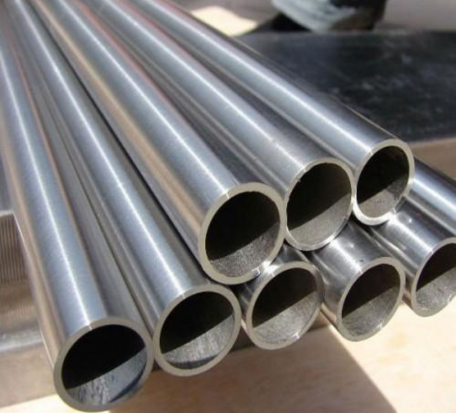
Duplex Steel Pipes & Tubes Supplier & Exporter

High quality Duplex Steel Pipes and Tubes for offshore, desalination, refinery and industrial applications

Duplex Steel Pipes & Tubes Supplier & Exporter

Duplex steel pipes and tubes are widely utilized across offshore platforms, desalination plants, refinery systems, subsea pipelines, and chemical processing industries where high mechanical strength and superior chloride corrosion resistance are critical. Industrial projects operating in aggressive marine and sour service environments increasingly prefer Duplex piping systems because conventional 300-series stainless steel may face stress corrosion cracking under long-term chloride exposure.

International EPC contractors across UAE, Saudi Arabia, Qatar, Singapore, Australia, and Southeast Asia generally prioritize Duplex steel piping systems supported by ASTM compliance, EN 10204 certification, PMI verification, and third-party inspection approvals for critical process applications.

Duplex Steel Pipes for Offshore, Desalination & High-Chloride Systems

Duplex steel pipes combine ferritic and austenitic microstructures, allowing higher yield strength and improved resistance against chloride-induced corrosion compared to conventional stainless steel grades. Offshore and desalination projects frequently utilize Duplex 2205 piping because it provides improved resistance against pitting corrosion, chloride stress corrosion cracking, and aggressive seawater environments.

Material Grade UNS Number PREN Range Yield Strength SCC Resistance Chloride Resistance Seawater Suitability Max Operating Temperature Typical Industrial Usage
316L Stainless Steel S31603 24–26 Moderate Moderate Moderate Limited Moderate Utility piping systems
Duplex 2205 S31803 35–38 High Excellent High Strong Good Offshore & desalination
Duplex 2205 S32205 35–38 High Excellent High Strong Good Sour service systems
Super Duplex 2507 S32750 >40 Very High Exceptional Very High Excellent High Subsea & seawater systems
Super Duplex F55 S32760 >40 Very High Exceptional Very High Excellent High Marine engineering

PREN values are commonly utilized to evaluate pitting corrosion resistance in chloride-rich environments. Super Duplex grades with PREN values above 40 are generally preferred for aggressive seawater systems and subsea applications where long-term corrosion reliability is critical.

Duplex Steel Pipe Chemical Composition & Metallurgical Properties

Chromium, molybdenum, nickel, and nitrogen content directly influence the corrosion resistance and mechanical stability of Duplex stainless steel pipes. Higher nitrogen and molybdenum levels improve pitting resistance and chloride performance in marine and offshore environments.

Grade Chromium (%) Nickel (%) Molybdenum (%) Nitrogen (%) Copper (%) Tungsten (%) Key Metallurgical Advantage
S31803 21–23 4.5–6.5 2.5–3.5 0.08–0.20 Balanced strength and corrosion resistance
S32205 22–23 4.5–6.5 3.0–3.5 0.14–0.20 Improved chloride resistance
S32750 24–26 6–8 3–5 0.24–0.32 Superior seawater performance
S32760 24–26 6–8 3–4 0.20–0.30 0.5–1.0 0.5–1.0 Enhanced pitting resistance

Duplex Mechanical Properties

Grade Tensile Strength Yield Strength Hardness Elongation Impact Strength
S31803 620 MPa 450 MPa 290 HB 25% High
S32205 655 MPa 450 MPa 290 HB 25% High
S32750 800 MPa 550 MPa 310 HB 20% Very High
S32760 750 MPa 550 MPa 300 HB 25% Very High

These mechanical properties ensure that Duplex Steel pipes and tubes maintain superior strength and durability under extreme offshore and industrial operating conditions.

Sigma Phase Control During Duplex Pipe Manufacturing & Welding

Improper welding temperatures and uncontrolled cooling cycles can result in the formation of intermetallic phases such as sigma phase, which may significantly reduce corrosion resistance and impact toughness in Duplex stainless steel systems. Offshore and refinery procurement teams increasingly evaluate suppliers based on welding process control and metallurgical stability during fabrication.

Manufacturing Condition Metallurgical Risk Operational Impact Prevention Method Relevant Standard
Excessive weld heat Sigma phase formation Reduced corrosion resistance Controlled heat input ASTM A923
Slow cooling cycle Ferrite imbalance Reduced toughness Controlled cooling ASTM A790
Improper filler selection Weld degradation Lower SCC resistance Qualified WPS/PQR ASME IX
Incorrect heat treatment Intermetallic precipitation Brittle behavior Solution annealing ASTM A182
Extended thermal exposure Secondary phase formation Reduced seawater reliability Heat cycle monitoring ASTM A923

Projects involving offshore pipelines and desalination systems increasingly prioritize suppliers capable of maintaining strict welding controls because improper phase balance may compromise long-term operational reliability in chloride-rich environments.

ASTM A923 Testing & Duplex Pipe Quality Verification

ASTM A923 testing is widely utilized for evaluating the presence of detrimental intermetallic phases and validating corrosion resistance performance in Duplex steel materials used within critical industrial systems. EPC buyers frequently request detailed QA/QC documentation before approving Duplex piping systems for offshore and refinery applications.

Inspection Standard Inspection Type Purpose Failure Risk Prevented Critical Industries Buyer Benefit
ASTM A923 Method A Metallographic Test Detect intermetallic phases Sigma phase formation Offshore Improved weld reliability
ASTM A923 Method B Corrosion Test Validate pitting resistance Chloride attack Desalination Longer service life
ASTM A923 Method C Charpy Impact Test Verify toughness Brittle fracture LNG & offshore Low-temperature reliability
PMI Testing Chemical Verification Confirm grade chemistry Material mix-up EPC projects Procurement safety
Hydrostatic Testing Pressure Testing Validate pressure integrity Leakage failure Refinery systems Operational reliability
Ultrasonic Testing Weld Inspection Detect internal defects Structural failure Offshore piping Reduced downtime
Radiography Testing Weld Evaluation Internal weld quality Weld cracking Petrochemical Safer process operation

Positive Material Identification (PMI) verification is frequently mandatory for Duplex steel exports because it helps eliminate grade mixing risks during refinery and offshore procurement projects.

MTC 3.1 vs 3.2 Certification for Duplex Steel Pipe Projects

Mill Test Certificates remain one of the most critical procurement documents for Duplex steel piping systems because they provide traceability regarding chemical composition, mechanical properties, and inspection verification. Offshore and EPC projects frequently require third-party witnessed inspections before shipment approval.

Certificate Type Inspection Level Verification Authority Typical Projects Lead Time Impact Buyer Importance
EN 10204 3.1 Mill verified inspection Manufacturer Standard industrial systems Standard Material traceability
EN 10204 3.2 Third-party witnessed inspection SGS / BV / TUV Offshore & EPC projects Additional coordination High-risk project approval

Projects requiring EN 10204 3.2 certification generally involve additional coordination between manufacturers and inspection agencies because testing procedures are independently witnessed before shipment release.

Duplex Steel Pipe Corrosion Resistance & Lifecycle Performance Comparison

Duplex steel pipes are increasingly selected over conventional stainless steel systems because their higher yield strength and superior chloride SCC resistance help reduce long-term operational maintenance in aggressive environments.

Parameter 316L Stainless Steel Duplex 2205 Super Duplex 2507
Yield Strength Lower Nearly 2× Higher Very High
Chloride SCC Resistance Moderate Excellent Exceptional
Wall Thickness Requirement Higher Lower Lower
Pitting Resistance Moderate High Very High
Offshore Service Life Moderate Long-Term Extended
Lifecycle Maintenance Higher Lower Lower
Seawater Performance Limited Strong Excellent
Weight Reduction Capability Moderate Better Best

Higher mechanical strength often allows Duplex piping systems to utilize reduced wall thickness while maintaining pressure handling capability, helping improve lifecycle cost efficiency across offshore and desalination infrastructure projects.

Global Engineering Compliance & Project Qualification Framework

International Duplex steel pipe procurement is governed by region-specific engineering qualification systems that define material suitability for offshore, refinery, petrochemical, desalination, and heavy industrial applications. These systems evaluate corrosion resistance, pressure integrity, weld reliability, and material traceability under real operating conditions.

Sanco Steel aligns its Duplex pipe supply with global EPC expectations by ensuring metallurgical consistency, application-based grade selection, and export-ready documentation for industrial project approval.

Region Engineering Requirement System Project Environment Qualification Focus Technical Evaluation Criteria
Gulf Region Offshore & refinery engineering frameworks Oil & gas platforms, desalination plants, petrochemical systems Chloride resistance and sour service performance Stress corrosion cracking resistance and weld integrity
Saudi Arabian industrial sector High-pressure process piping frameworks Refinery pipelines and chemical systems Pressure integrity and material stability Thermal cycling and weld performance control
Saudi import system Industrial import compliance frameworks Cross-border industrial supply chain Documentation accuracy and product conformity Certification consistency and traceability
Mexican industrial sector Oil, gas, and refinery qualification systems Offshore pipelines and refinery infrastructure Material traceability and pressure reliability Long-term corrosion and pipeline safety
Mexican documentation system Engineering measurement frameworks EPC documentation and industrial reporting Standardized technical reporting Measurement consistency control
Southeast Asian marine sector Hybrid engineering validation systems Marine infrastructure and industrial piping ASTM-based dual-standard acceptance Corrosion compatibility and dimensional accuracy
Australian industrial sector Mining and heavy engineering frameworks Mining pipelines and remote infrastructure Durability under extreme conditions Long lifecycle mechanical stability

Export Packaging, PMI Verification & Ready Stock Support

Industrial buyers increasingly prioritize suppliers capable of supporting seaworthy export packaging, project marking, PMI verification, and urgent dispatch schedules for offshore and refinery systems.

Export Handling System Purpose Buyer Benefit Export Relevance
ISPM-15 Wooden Pallets International packaging compliance Customs approval Australia & GCC
LDPE Individual Wrapping Surface protection Reduced damage risk Mirror finish tubes
Moisture Desiccants Corrosion prevention Better transit protection Marine exports
Plastic End Caps Pipe end safety Reduced contamination Process piping
PMI Material Tagging Grade traceability Prevents material mix-up EPC projects
Heat Number Marking Batch verification Easier inspection tracking Offshore projects
Ready Stock Inventory Faster dispatch Reduced shutdown delays Urgent project supply

Why EPC Contractors and Industrial Buyers Choose Our Duplex Steel Pipes

Industrial procurement teams increasingly evaluate suppliers based on certification transparency, export handling capability, traceability systems, and project execution support rather than pricing alone.

Buyers across offshore, refinery, marine, desalination, and infrastructure sectors generally prioritize suppliers capable of supporting ASTM-compliant materials, third-party inspections, project marking, and urgent export shipments.

Related Industrial Alloy Pipe Solutions

Projects requiring broader industrial process piping systems may also utilize Stainless Steel Pipes & Tubes for utility and process applications across petrochemical, marine, and infrastructure industries.

Higher chloride exposure and subsea operating environments may additionally require Super Duplex Steel Pipes & Tubes for aggressive seawater and offshore engineering systems.

Frequently Asked Questions

  • 1. What is PREN in Duplex steel pipes? PREN stands for Pitting Resistance Equivalent Number and is used to evaluate corrosion resistance performance in chloride-rich environments.
  • 2. Why are Duplex steel pipes preferred for offshore projects? Duplex steel offers superior chloride SCC resistance, higher yield strength, and improved seawater reliability compared to conventional stainless steel grades.
  • 3. What causes sigma phase formation in Duplex steel? Sigma phase may form because of excessive welding temperatures or improper heat treatment, which can reduce corrosion resistance and impact toughness.
  • 4. What is ASTM A923 testing? ASTM A923 testing is utilized to detect detrimental intermetallic phases and verify corrosion resistance performance in Duplex stainless steel materials.
  • 5. When is EN 10204 3.2 certification required? EN 10204 3.2 certification is generally required for offshore, refinery, and critical EPC projects involving third-party witnessed inspection procedures.