
icon

Office

Mon - Sat, 9:00 AM - 7:00 PM

icon

Your Email

sales@sancosteels.com

preet@sancosteels.com

icon

Address

Mumbai-400004.
Maharashtra, India.

Super Duplex Steel Pipes & Tubes Supplier & Exporter

High quality Super Duplex Steel Pipes and Tubes for offshore, subsea, desalination and high-chloride industrial applications

Super Duplex Steel Pipes & Tubes Supplier & Exporter

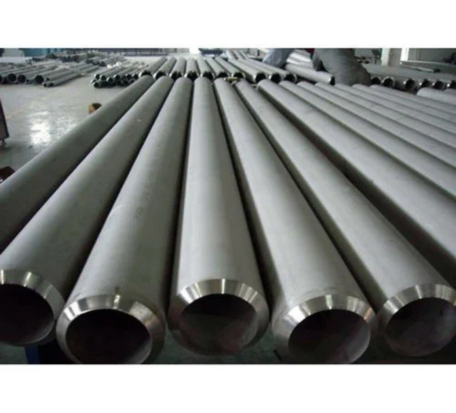
Super Duplex Steel Pipes & Tubes are engineered for extreme chloride environments where conventional stainless steel grades fail under stress corrosion cracking, pitting, and long-term seawater exposure. These pipes are widely used in offshore oil & gas platforms, desalination plants, subsea pipelines, chemical processing units, and high-pressure marine engineering systems where both mechanical strength and corrosion resistance are critical.

Industrial procurement teams in UAE, Saudi Arabia, Qatar, Singapore, Australia, Vietnam, and Mexico prioritize Super Duplex piping systems due to their high PREN value, superior yield strength, and compliance with ASTM A790 / ASTM A928 standards. For EPC-driven projects, material selection is not just about grade selection but about verified metallurgy, traceable certification, and export reliability.

Super Duplex Steel Pipes for Offshore, Subsea & High-Chloride Systems

Super Duplex steel combines a balanced austenitic-ferritic microstructure with significantly higher chromium, molybdenum, and nitrogen content than standard Duplex grades. This structure provides exceptional resistance to chloride-induced corrosion and stress cracking in seawater and sour service environments.

These pipes are typically selected for subsea pipelines, offshore risers, desalination systems, and aggressive chemical process environments where failure risk is not acceptable. Grades such as UNS S32750 and UNS S32760 are preferred due to their ability to maintain structural stability under high pressure and fluctuating thermal conditions.

Super Duplex Steel Pipe Technical Specification (ASTM A790 / A928)

This table defines the core engineering and procurement parameters used in EPC and industrial selection processes.

Parameter Standard Requirement UNS S32750 (2507) UNS S32760 (F55) Industry Relevance
Manufacturing Standard ASTM A790 / A928 Compliant Compliant Global offshore projects
Pipe Type Seamless / Welded Available Available Process piping systems
Size Range 1/2" to 24" Industrial standard Industrial standard EPC project flexibility
Schedule Range SCH 5S to XXS High pressure rated High pressure rated Subsea & refinery systems
Density ~7.8 g/cm³ Stable Stable Weight optimization
Max Operating Temp Up to 300°C Suitable Suitable High-temperature service
Corrosion Environment Chloride / Sour Excellent Excellent Seawater exposure
Pressure Handling High pressure systems Very High Very High Offshore pipelines

Super Duplex pipes are selected when operational failure is not acceptable, particularly in offshore systems where repair cost and downtime are significantly higher than material cost.

Chemical Composition & Metallurgical Strength of Super Duplex Steel

The performance of Super Duplex steel is directly controlled by its alloying elements. Higher chromium improves passive film stability, molybdenum enhances pitting resistance, and nitrogen increases mechanical strength without reducing corrosion resistance.

Element S32750 (%) S32760 (%) Function in Performance
Chromium (Cr) 24–26 24–26 Corrosion resistance stability
Nickel (Ni) 6–8 6–8 Microstructure balance
Molybdenum (Mo) 3–5 3–4 Pitting resistance enhancement
Nitrogen (N) 0.24–0.32 0.20–0.30 Strength & SCC resistance
Copper (Cu) 0.5–1.0 Seawater resistance improvement
Tungsten (W) 0.5–1.0 Localized corrosion resistance

Higher PREN values (>40) indicate strong suitability for seawater immersion, offshore drilling systems, and desalination pipelines where chloride concentration is continuously high.

Mechanical Properties of Super Duplex Steel Pipes

Super Duplex steel delivers nearly double the yield strength of conventional 316L stainless steel, enabling thinner wall construction while maintaining pressure integrity.

Property S32750 S32760 316L Reference Engineering Advantage
Tensile Strength 800 MPa 750 MPa 485 MPa Higher load capacity
Yield Strength 550 MPa 550 MPa 170–220 MPa Reduced wall thickness
Hardness 310 HB 300 HB 150–190 HB Wear resistance
Elongation 20% 25% 40% Balanced ductility
Impact Strength Very High Very High Moderate Offshore safety

This strength-to-corrosion balance allows significant lifecycle cost reduction in offshore pipelines and desalination systems.

Sigma Phase Risk Control in Super Duplex Manufacturing

Sigma phase formation is a critical metallurgical risk in Super Duplex steel when exposed to improper welding heat input or uncontrolled cooling cycles. This intermetallic phase reduces toughness and weakens corrosion resistance, especially in chloride-rich environments.

Controlled manufacturing processes are essential to prevent sigma phase precipitation. This includes regulated heat input, proper filler selection, and post-weld solution annealing.

Manufacturing Risk Cause Impact on Performance Control Method Standard Reference
Excess heat input Improper welding temperature Loss of corrosion resistance Heat control monitoring ASTM A923
Slow cooling cycle Thermal imbalance Reduced toughness Controlled cooling ASTM A790
Wrong filler material Chemical mismatch SCC susceptibility Qualified WPS/PQR ASME IX
Overheating zones Heat exposure Intermetallic formation Solution annealing ASTM A182
Thermal cycling Extended exposure Phase instability Process monitoring ASTM A923

This level of metallurgical control is essential for offshore pipelines, where even minor phase imbalance can lead to long-term failure under seawater exposure.

ASTM A923 Testing & Quality Verification System

Super Duplex pipes require strict testing protocols to ensure structural integrity and corrosion resistance under real-world operating conditions. ASTM A923 testing is widely used to detect harmful intermetallic phases and validate corrosion safety.

Test Method Inspection Type Purpose Failure Prevented Application Area
Method A Metallographic Test Detect sigma phase Structural degradation Offshore systems
Method B Corrosion Test Pitting resistance validation Chloride attack Desalination plants
Method C Charpy Impact Test Toughness verification Brittle fracture LNG & subsea systems
PMI Testing Chemical verification Grade confirmation Material mix-up EPC projects
Hydro Test Pressure testing Leak prevention Pipeline failure Refinery systems
Ultrasonic Test Internal inspection Weld defect detection Structural failure Offshore pipelines
Radiography Weld inspection Joint integrity check Crack formation Petrochemical systems

PMI verification is mandatory in most EPC procurement workflows to eliminate alloy mixing risks in offshore and refinery installations.

MTC 3.1 vs 3.2 Certification for Super Duplex Steel Projects

Material traceability is a core requirement in industrial procurement. Mill Test Certificates (MTC) confirm chemical composition, mechanical properties, and compliance with international standards.

Certificate Type Inspection Level Verification Authority Application Type Project Criticality
EN 10204 3.1 Mill certified Manufacturer Standard industrial use Medium
EN 10204 3.2 Third-party witnessed SGS / BV / TUV Offshore & EPC projects High

Projects requiring 3.2 certification involve additional inspection coordination and longer approval cycles but are mandatory for high-risk offshore and refinery applications.

Lifecycle Cost Advantage of Super Duplex Steel Pipes

Although Super Duplex steel has a higher upfront cost than standard stainless steel, it significantly reduces lifecycle costs in aggressive environments.

Performance Factor 316L Stainless Steel Duplex 2205 Super Duplex 2507 Operational Impact
Corrosion Resistance Moderate High Exceptional Reduced failure risk
Wall Thickness Requirement High Lower Lowest Material savings
Maintenance Frequency High Medium Low Reduced shutdowns
Offshore Service Life Moderate Long Extended Higher ROI
Weight Efficiency Low Medium High Installation savings

Lifecycle analysis shows that Super Duplex delivers long-term cost advantage in offshore and desalination systems due to reduced maintenance and extended operational lifespan.

Global Engineering Compliance & Export Qualification Framework

Super Duplex steel pipes are selected based on region-specific engineering compliance systems used in EPC and industrial procurement.

Region Engineering Focus Application Environment Qualification Requirement
Gulf Countries Offshore corrosion & sour service Oil & gas, desalination Chloride resistance validation
Saudi Arabia High-pressure refinery systems Petrochemical plants Thermal & weld integrity
Mexico Oil & refinery standards Offshore pipelines Material traceability
Southeast Asia Hybrid ASTM/JIS systems Marine infrastructure Dual-standard compliance
Australia Mining & offshore durability Remote pipelines Mechanical lifecycle stability

These compliance systems ensure that Super Duplex pipes meet both operational and regulatory expectations across global EPC projects.

Export Packaging, PMI Verification & Ready Stock Supply

Industrial-grade packaging and traceability systems are critical for offshore and export-driven procurement cycles.

Packaging System Purpose Buyer Benefit Export Use Case
ISPM-15 Wooden Pallets Global shipment compliance Customs clearance GCC & Australia
LDPE Wrapping Surface protection Damage prevention Polished pipes
Moisture Desiccants Corrosion control Transit safety Marine shipments
Plastic End Caps Pipe protection Contamination control Process piping
PMI Tagging Alloy traceability Grade verification EPC projects
Heat Number Marking Batch tracking Inspection support Offshore supply
Ready Stock Inventory Fast dispatch Reduced downtime Emergency procurement

Applications of Super Duplex Steel Pipes

Super Duplex Steel Pipes are used in high-risk industrial environments where corrosion resistance and mechanical strength must perform together under continuous pressure. These include offshore oil and gas platforms, subsea pipeline systems, and desalination plants exposed to high chloride seawater conditions.

They are also widely applied in chemical processing industries, marine engineering structures, and high-pressure refinery networks where material failure can lead to significant operational downtime and safety risk. The material selection is driven by long-term reliability in aggressive environments rather than initial procurement cost.

Related Industrial Pipe Solutions

Super Duplex Steel Pipes are part of a broader corrosion-resistant piping system used across global industrial projects. Depending on pressure requirements, chemical exposure, and cost optimization needs, buyers also evaluate other alloy-based piping systems within the same project framework.

Duplex Steel Pipes & Tubes Supplier & Exporter are widely utilized for offshore, desalination, and high-chloride environments requiring superior strength and chloride resistance.

Stainless Steel Pipes & Tubes Supplier & Exporter are commonly selected for utility, process, and industrial piping applications across petrochemical, marine, and infrastructure industries.

Frequently Asked Questions

  • 1. What makes Super Duplex steel different from Duplex steel? Super Duplex has higher chromium, molybdenum, and nitrogen content, offering superior corrosion resistance and strength for extreme environments.
  • 2. Where are Super Duplex pipes mainly used? They are used in offshore platforms, desalination plants, subsea pipelines, and high-chloride chemical systems.
  • 3. What is PREN in Super Duplex steel? PREN (Pitting Resistance Equivalent Number) measures resistance to pitting corrosion; values above 40 indicate seawater suitability.
  • 4. What is sigma phase in Super Duplex steel? It is a brittle intermetallic phase formed due to improper heat treatment or welding, reducing corrosion resistance and toughness.
  • 5. When is EN 10204 3.2 certification required? It is required for offshore and EPC projects where third-party inspection and full traceability are mandatory.