
icon

Office

Mon - Sat, 9:00 AM - 7:00 PM

icon

Your Email

sales@sancosteels.com

preet@sancosteels.com

icon

Address

Mumbai-400004.
Maharashtra, India.

Inconel Pipes & Tubes Supplier & Exporter

High quality Inconel Pipes and Tubes for high-temperature, offshore, chemical processing and sour gas industrial applications

Inconel Pipes & Tubes Supplier & Exporter | High-Temperature Nickel Alloy Solutions

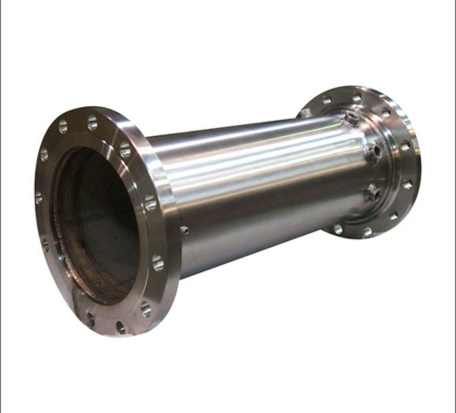
Inconel pipes and tubes are high-performance nickel-based alloy products engineered for extreme temperature, oxidation, and corrosive environments where conventional stainless steel grades fail. These materials are widely used in offshore oil & gas platforms, chemical processing units, heat exchangers, marine engineering systems, and high-pressure refinery networks.

In global EPC procurement, Inconel is selected not for general use but for critical service conditions involving sustained heat exposure, chloride-rich seawater, and sour gas (H₂S) environments. Buyers in Gulf countries, Southeast Asia, Australia, and Mexico prioritize Inconel piping systems due to their long-term structural stability and resistance to thermal fatigue and corrosion cracking.

Industrial procurement teams evaluate Inconel pipes based on ASTM compliance, mechanical strength stability, weld integrity, and third-party inspection documentation such as MTC 3.1 and 3.2 certifications.

Inconel Grades Selection Guide for High-Temperature Industrial Applications

Selecting the correct Inconel grade is a critical engineering decision that directly impacts system safety, lifecycle cost, and corrosion resistance performance. Each grade is engineered for a specific temperature range and chemical exposure condition.

Inconel 600 and 601 are commonly selected for high-temperature furnace and thermal processing applications, while Inconel 625 dominates offshore seawater and chemical environments. Inconel 718 and X750 are preferred for high-stress mechanical systems requiring creep resistance and structural stability.

Technical Grade Selection Table

Grade UNS No. ASTM Standard Max Temp (°C) Key Strength Corrosion Behavior Primary Application
Inconel 600 N06600 ASTM B167 1093 Oxidation resistance Stable in dry heat Furnace components, heat shields
Inconel 601 N06601 ASTM B168 1200 Carburization resistance Excellent thermal stability Industrial furnaces, heat reactors
Inconel 625 N06625 ASTM B444 982 SCC resistance Excellent seawater resistance Offshore pipelines, desalination
Inconel 718 N07718 ASTM B637 704 High tensile strength Moderate corrosion resistance Aerospace, turbine systems
Inconel X750 N07750 ASTM B637 700 Creep resistance Good oxidation resistance Nuclear and gas turbines

PREN (Pitting Resistance Equivalent Number) is not typically used for Inconel grades, but corrosion resistance is evaluated through molybdenum and nickel stabilization, which significantly improves chloride resistance in offshore and chemical environments.

Chemical Composition & Metallurgical Stability of Inconel Alloys

The performance of Inconel alloys is directly influenced by nickel content, chromium stability, and molybdenum additions. These elements provide oxidation resistance, thermal stability, and structural integrity under extreme stress conditions.

High nickel content ensures resistance against chloride attack and thermal fatigue, while chromium improves oxidation resistance at elevated temperatures. Molybdenum enhances pitting resistance in seawater and chemical exposure systems.

Chemical Composition Table

Grade Nickel % Chromium % Iron % Molybdenum % Niobium % Functional Advantage
600 ≥72 14–17 6–10 High-temperature oxidation resistance
601 58–63 21–25 Balance Carburization resistance
625 ≥58 20–23 Balance 8–10 3–4 Chloride + seawater resistance
718 50–55 17–21 Balance 2.8–3.3 4.75–5.5 Precipitation hardening strength
X750 ≥70 14–17 Balance Ti/Al 0.7–1.2 Creep and spring stability

Mechanical Properties & High-Stress Performance Behavior

Inconel pipes are engineered for environments where both thermal and mechanical stresses occur simultaneously. Their mechanical strength is significantly higher than conventional stainless steel grades, making them suitable for pressure-intensive and high-vibration systems.

Grades such as Inconel 718 exhibit precipitation hardening behavior, allowing them to maintain strength at elevated temperatures. Inconel 625 provides an optimal balance between corrosion resistance and mechanical stability, making it widely used in offshore and marine systems.

Mechanical Properties Table

Grade Tensile Strength (MPa) Yield Strength (MPa) Hardness Elongation % Engineering Behavior
600 550–690 240–345 Moderate 30–35 Thermal stability
601 600–760 240–310 Moderate 30–40 High heat resistance
625 690–930 275–414 High ~30 Chloride SCC resistance
718 1030–1240 725–1035 Very High 12–20 High load structural strength
X750 900–1100 600–800 High ~20 Creep resistance

When to Use Inconel 625 vs Duplex vs Monel (Engineering Selection Insight)

Inconel 625 is typically selected for offshore seawater pipelines, sour gas systems, and high-temperature chemical environments where both corrosion resistance and mechanical strength are required simultaneously.

Duplex stainless steel is preferred for cost-sensitive chloride environments where temperature exposure is moderate, while Monel alloys are used in highly aggressive chemical environments such as hydrofluoric acid exposure.

In chemical processing systems requiring exceptional resistance to reducing acids and seawater exposure at moderate temperatures, our Monel Pipes & Tubes Supplier & Exporter range provides a cost-effective and technically stable alternative.

Manufacturing Control, Heat Treatment & Weld Integrity

The performance of Inconel piping systems is heavily dependent on controlled heat treatment and welding procedures. Improper thermal cycles can lead to carbide precipitation, reduced ductility, and localized corrosion susceptibility.

Solution annealing and controlled cooling are essential processes used to maintain metallurgical stability. In precipitation-hardened grades like Inconel 718, aging treatment is required to achieve final mechanical strength.

All welding procedures are qualified under ASME IX standards to ensure structural reliability in offshore and refinery applications.

Testing & Quality Assurance for Inconel Pipes (NDT + PMI + ASTM)

Inconel pipes undergo strict quality testing to ensure performance under extreme operating conditions. These tests validate chemical composition, pressure integrity, and internal structural stability.

Quality Testing Table

Test Type Standard Purpose Risk Prevented
PMI Testing ASTM A751 Alloy verification Grade mix-up
Hydrostatic Test ASTM A530 Pressure validation Leakage failure
Ultrasonic Test ASTM E213 Internal defect detection Structural failure
Radiography ASTM E94 Weld inspection Weld cracking
Tensile Test ASTM E8 Strength validation Mechanical failure

PMI testing is mandatory for export projects to ensure correct alloy identification in EPC and refinery procurement systems.

MTC 3.1 vs 3.2 Certification for Export Procurement

Mill Test Certificates (MTC) are critical in industrial procurement as they ensure full traceability of material composition and mechanical properties.

Certification Table

Certificate Verification Type Authority Application Lead Time
3.1 Mill certified Manufacturer Standard industrial use Normal
3.2 Third-party verified SGS / BV / TUV Offshore & EPC projects +2–4 weeks

EN 10204 3.2 certification is required in high-risk applications where third-party inspection and witnessed testing are mandatory.

Export Packaging, Logistics & Ready Stock Availability

Inconel pipes are supplied with export-grade packaging designed for long-distance maritime transport. Each pipe is individually protected with anti-corrosion wrapping, end caps, and moisture-resistant materials.

Heat number marking ensures full traceability during inspection at international ports. ISPM-15 compliant wooden packaging is used for Gulf, SEA, and Australian shipments to meet import regulations.

Why Industrial Buyers Choose Our Inconel Pipes

Industrial procurement teams evaluate Inconel pipes based on ASTM compliance, mechanical strength stability, weld integrity, and third-party inspection documentation. Our supply capability covers grades 600, 601, 625, 718, and X750 with full certification support for EPC, offshore, and refinery procurement systems.

We offer PMI testing, MTC 3.1/3.2 certification, hydrostatic testing, and ISPM-15 compliant export packaging to support international project procurement and delivery requirements.

Related Industrial Alloy Solutions

For applications requiring high-temperature oxidation resistance and mechanical strength, Inconel remains the preferred alloy system. However, certain chemical environments require alternative nickel-based solutions.

In chloride-rich seawater environments where cost optimization is critical, Duplex Steel Pipes & Tubes Supplier & Exporter offer a balanced engineering alternative.

For hydrofluoric acid and marine chemical systems requiring superior corrosion resistance at moderate temperatures, Monel Pipes & Tubes Supplier & Exporter provide a specialized solution.

Frequently Asked Questions

  • 1. Which Inconel grade is best for offshore pipelines? Inconel 625 is most widely used due to its excellent seawater corrosion resistance and mechanical stability.
  • 2. What is the difference between Inconel 600 and 625? 600 is primarily for high-temperature oxidation resistance, while 625 offers superior chloride corrosion resistance.
  • 3. Is Inconel suitable for sour gas environments? Yes, especially Inconel 625 and 718 when compliant with NACE MR0175/ISO 15156.
  • 4. Do you provide MTC 3.2 certification? Yes, third-party witnessed inspection certificates are available for EPC and offshore projects.
  • 5. Can Inconel pipes handle extreme heat applications? Yes, Inconel 601 and 600 are specifically designed for furnace and thermal processing systems.